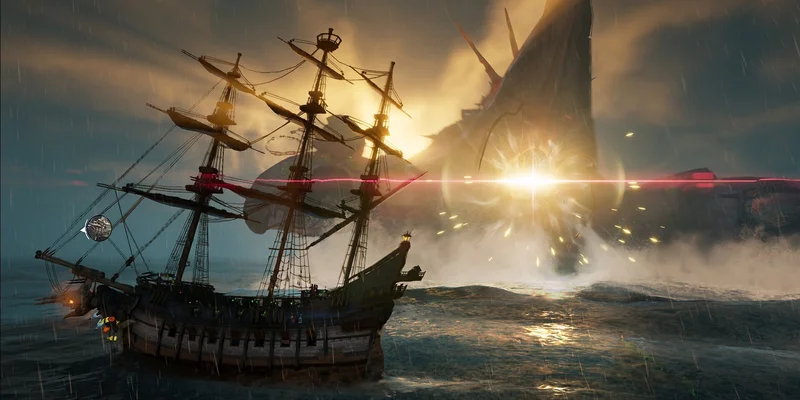
- Sea of Remnants playtest: The Dawnbreaker CBT is scheduled to begin on December 3, 2026.
- Access first: Follow official registration, eligibility, and installation instructions before testing begins.
- Build carefully: Prioritize a stable crew and primary fleet instead of upgrading every option.
- Test focus: Expect ocean exploration, crew combat, fleet management, and progression systems.
- Status check: CBT access is separate from the game’s eventual full release.
Sea of Remnants Playtest Status and Scope
The Sea of Remnants playtest refers to the Dawnbreaker Closed Beta Test, a pre-release testing phase for NetEase Games’ ocean-fantasy RPG. The announced CBT begins on December 3, 2026, and should be treated as a limited test build rather than the final launch version.
Players take the role of a memory-lost puppetfolk sailor who travels across a changing ocean, recruits companions, manages a fleet, battles enemies, and develops the pirate city of Orbtopia. The test is designed to showcase the game’s main progression loop while giving the development team useful player feedback.
| Test Element | What to Expect | Practical Advice |
|---|---|---|
| Test phase | Dawnbreaker Closed Beta | Follow the official access instructions |
| Start date | December 3, 2026 | Confirm the local start time before installation |
| Playable roster | 21 characters announced for CBT | Build a focused core team first |
| World scale | Ocean exploration and Orbtopia | Follow objectives before taking long detours |
| NPC scope | More than 400 named NPCs described for the world | Explore conversations and city activities |
| Data status | Test-build progress may change | Do not assume CBT systems are final |
Ocean Exploration
Sail between locations, investigate points of interest, collect resources, and respond to encounters across the ocean world.
Crew Development
Recruit and improve characters for damage, defense, support, and exploration utility.
Orbtopia
Use the pirate city as a central hub for facilities, NPC interactions, trading, and progression activities.
Treat the CBT as a learning environment. Record which systems unlock first, which resources feel scarce, and which crew roles solve the most common encounters.
The safest reference points for access announcements are the official Sea of Remnants website, the Steam product page, and the official Discord community. These channels can provide updated eligibility rules, regional details, installation instructions, and schedule changes.
Dawnbreaker CBT Setup: Step-by-Step
Before entering the test, organize your account, installation, and first-session plan. The following process reduces confusion and helps you spend the opening hours learning the systems instead of searching for missing information.
Check the official test announcement
Open the official website, Steam page, and Discord announcements. Confirm the current test window, eligibility requirements, supported access method, and any regional limitations before attempting to join.
Complete the required registration
Use only the official sign-up or invitation route. Enter account details carefully and keep confirmation messages available in case the test requires an additional verification step.
Prepare the installation
Install the test client through the designated official channel when it becomes available. Leave enough storage space for updates and avoid relying on unofficial mirrors or reposted files.
Plan your first session
Reserve time to complete opening objectives, tutorial battles, sailing tasks, and system unlocks. Avoid spending early resources until you understand the crew, fleet, and upgrade interfaces.
Record changes and feedback
Note unclear mechanics, progression bottlenecks, technical issues, and useful quality-of-life improvements. Test builds can change quickly, so label notes with the active CBT build when possible.
| Setup Task | Recommended Action | Avoid |
|---|---|---|
| Access source | Use official website, Steam, or Discord announcements | Unverified invite links |
| Account details | Match the required registration information | Repeatedly creating unverified accounts |
| Installation | Use the designated test client | Third-party downloads |
| Schedule | Confirm the start window and local time | Assuming the announcement time applies everywhere |
| Feedback | Record clear examples and conditions | Reporting only that something “feels bad” |
A closed beta is not the same as unrestricted early access. Registration does not automatically guarantee entry unless the official announcement confirms that access is open to all registrants.
The game is still in a pre-release testing stage. Access rules, available content, supported features, and progression behavior can differ from the eventual release version. Keep the official channels bookmarked and recheck them near the start of the test.
Opening Progression and Combat Priorities
The most efficient opening route is to unlock systems before chasing optional rewards. Sea of Remnants combines turn-based combat, ocean travel, crew development, and fleet management, so early resources are more valuable when concentrated around a dependable progression team.
Balanced Core
Combine reliable damage, defensive stability, and at least one utility option. This is the safest foundation for story progression.
Focused Investment
Upgrade the crew members used most often instead of spreading materials across the entire CBT roster.
Flexible Formation
Keep reserve characters available for encounters that require different roles, positioning, or tactical effects.
| Priority | Early Goal | Why It Matters |
|---|---|---|
| 1 | Complete opening objectives | Unlocks core exploration, combat, crew, and fleet systems |
| 2 | Establish a main crew | Creates a dependable formation for repeated encounters |
| 3 | Improve the primary fleet | Supports safer travel and more consistent combat results |
| 4 | Advance the main story | Opens additional content and progression routes |
| 5 | Explore optional activities | Fills resource gaps after the main loop is stable |
During combat, identify the encounter’s pressure point before spending every ability. A damage-focused crew member may need protection, while a defensive or support character can create more value by stabilizing the formation than by dealing direct damage.
Use these principles during the opening sessions:
- Protect your main damage source rather than exposing it unnecessarily.
- Keep defensive coverage available for longer fights and unfamiliar encounters.
- Test skill timing before deciding that a character is weak or strong.
- Compare roles by scenario, since exploration utility and direct combat power are different measurements.
- Save upgrade materials for story requirements and systems that remain useful across multiple activities.
A smaller, well-developed core team usually provides more reliable early progress than a large roster with evenly distributed upgrades.
The announced CBT roster contains 21 playable characters, but the best investment depends on the active build and each character’s actual performance in testing. Avoid treating a preliminary tier list as a permanent ranking. Evaluate characters by role, versatility, development cost, and the content you plan to play.
Fleet Building for Exploration and Battles
Fleet development should begin with a clear objective. A story fleet needs balance, a resource fleet values travel efficiency, and a high-difficulty formation needs survivability and coordinated combat tools. Upgrading every ship equally can leave the account without a strong answer for any one activity.
| Fleet Goal | Ship and Crew Focus | Positioning Advice | Upgrade Priority |
|---|---|---|---|
| Main story | Balanced frontline, damage, and utility | Protect fragile damage options | Primary survivability and core combat systems |
| Resource gathering | Travel, cargo, and exploration utility | Use a conservative formation | Expedition efficiency and carrying capacity |
| Difficult combat | Defense, control, recovery, and focused damage | Protect priority targets | Survivability before secondary vessels |
| General testing | Flexible ships and mixed crew roles | Keep formation adaptable | Systems that help across several activities |
Story Fleet
Build around consistent combat performance and enough durability to handle unfamiliar encounters during normal progression.
Resource Fleet
Prioritize travel uptime, gathering efficiency, and carrying capacity while retaining enough power for unavoidable battles.
Challenge Fleet
Combine protection, control, recovery, and concentrated damage to manage stronger enemy pressure.
Fleet assignments should complement crew roles. Frontline positions favor durable members or characters that protect nearby allies. Backline positions are generally better for damage and utility options that need safer skill execution. Revisit placement whenever an encounter changes target priority or creates unusual formation pressure.
Choose the purpose of a fleet before selecting upgrades. A resource-focused setup and a high-difficulty combat setup should not consume materials in exactly the same way.
Because the CBT is a test build, keep a reserve of materials. New systems, balance changes, or progression requirements may alter the value of an upgrade. A flexible account is more useful than one that has exhausted every resource on an early option.
Crew Evaluation and Playtest Checklist
The Dawnbreaker test is a good opportunity to learn how crew roles interact rather than simply searching for one universal strongest character. A character can be valuable because of direct damage, defensive stability, exploration utility, fleet placement, or a combination of these functions.
| Crew Profile | Best Use | Investment Guidance |
|---|---|---|
| Flexible damage dealer | Story and general encounters | High priority after basic survivability |
| Defensive support | Bosses and long routes | High value when resources are limited |
| Fleet specialist | Formation-specific battles | Develop after the main team is stable |
| Exploration utility | Travel and resource collection | Useful when exploration efficiency matters |
| Narrow specialist | Specific enemy or challenge types | Situational investment |
Before and During the CBT:
- Confirm the December 3, 2026 test schedule through an official channel
- Complete registration or invitation requirements before the access window
- Finish opening objectives before spending resources on optional upgrades
- Build a balanced core crew with damage, defense, and utility coverage
- Record unclear mechanics, technical issues, and useful balance feedback
During the test, compare characters using consistent questions:
- Does the character perform well across more than one activity?
- Does the character require a specific formation to function?
- Is the character’s value immediate, or does it depend on later upgrades?
- Does the character improve survival, damage, travel, or resource efficiency?
- Can the same materials produce better results elsewhere?
Any ranking or recommendation labeled for the Dawnbreaker CBT describes test-period performance. Recheck the active build before applying it to later testing or the full release.
For official updates, use the Sea of Remnants Steam community hub, the official Discord, and the official YouTube channel. These are the most useful places to verify access notices, developer updates, and changes to testing information.
Q: When does the Sea of Remnants playtest begin?
The announced Dawnbreaker Closed Beta is scheduled to begin on December 3, 2026. Confirm the final access window through an official announcement because test schedules can change.
Q: Is the Dawnbreaker CBT the full game release?
No. Dawnbreaker is a limited pre-release test. Its available content, balance, progression, and access rules may differ from the eventual full version.
Q: How many characters are available in the CBT?
The announced Dawnbreaker CBT roster contains 21 playable characters. Their usefulness should be evaluated by role and scenario rather than by a single permanent ranking.
Q: What should new players upgrade first?
Start with a balanced core crew and the primary fleet used for story progression. Prioritize survivability, dependable damage, and upgrades that support several activities.
Related Sea of Remnants Guides
Continue with these Sea of Remnants guides: